
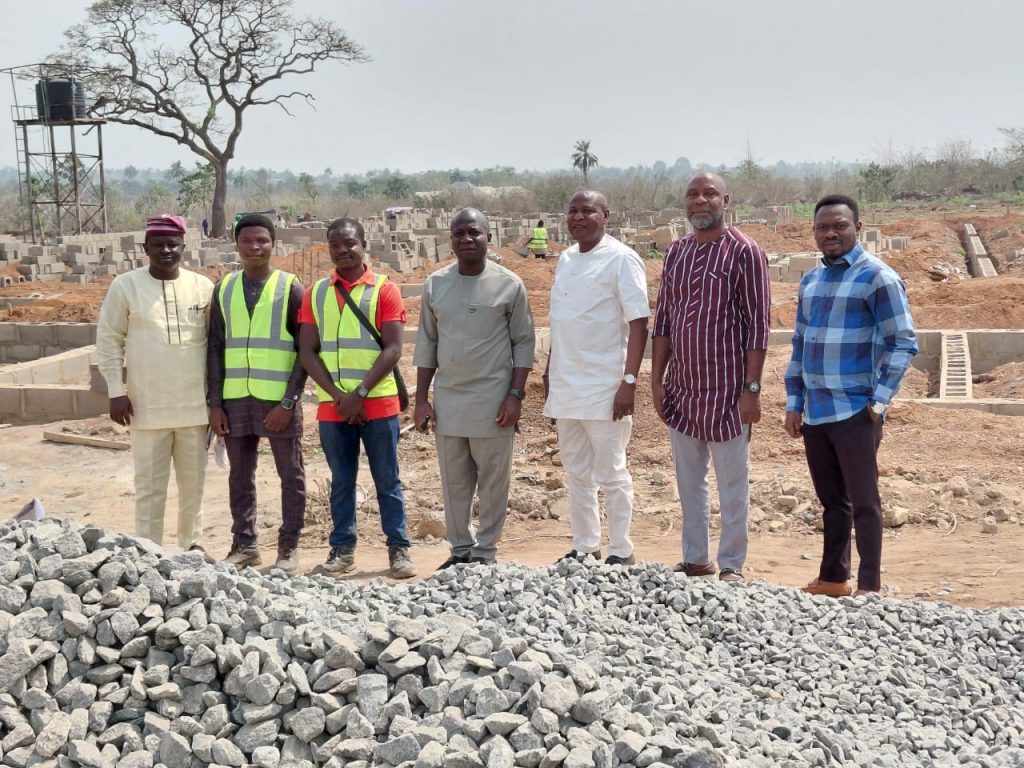
The Ekiti State Commissioner for Agriculture and Food Security, Mr Ebenezer Boluwade, has inspected the ongoing construction of an ultra-modern abattoir and a model veterinary hospital in Ado-Ekiti.
The projects are being implemented by the World Bank in partnership with the Ekiti State Government under the Livestock Productivity and Resilience Support (L-PRES) programme.
During the inspection, Mr Boluwade urged contractors to increase the pace of work, saying the facilities are expected to meet international standards in hygiene, efficiency and environmental sustainability once completed.
He said the abattoir complex would include a slaughter hall, mechanised meat-processing section, waste-processing unit, fertiliser processing unit, manure composting shed, lairage, cold room, administrative offices and a meat market.
According to the Commissioner, the project is aimed at improving meat quality, enhancing sanitary conditions, creating jobs and increasing revenue within the livestock sector.
Mr Boluwade also inspected the model veterinary hospital, describing it as an investment intended to strengthen animal healthcare, improve disease surveillance and provide better veterinary services to livestock farmers across the state.
- Ekiti Anglican Synod Urges Godly Parenting, Electoral Integrity, National Security Reforms
- Oyebanji Administration Deepens Agricultural Transformation in Ekiti, Expands BBYA Programme and Rural Infrastructure
- HIGHLIGHTS OF DECISIONS TAKEN AT THE THIRD MEETING (2026) OF THE EKITI STATE EXECUTIVE COUNCIL HELD AT THE EXECUTIVE COUNCIL CHAMBER, NEW GOVERNOR’S OFFICE, ADO-EKITI ON TUESDAY, 14TH APRIL, 2026
- Ekiti Trains Accountants on Transparency, Fiscal Discipline
- BAO 2026 Campaign Organisation Promises Issue-Based Campaign, Showcases Governor Oyebanji’s Performance
He was accompanied by the Permanent Secretary of his Ministry, Mr Babatope Ojo, and the State L-PRES project coordinator, Olayinka Adedipe.
The Commissioner praised the quality of work carried out so far but stressed the need for contractors to adhere strictly to approved specifications and timelines to ensure the facilities are completed on schedule.
He added that the State Government remains committed to investing in agricultural infrastructure as part of efforts to improve food security and livelihoods and to support the development of the livestock sector.