
Ekiti State authorities say they are strengthening emergency medical response as part of efforts to improve healthcare delivery and reduce preventable deaths.
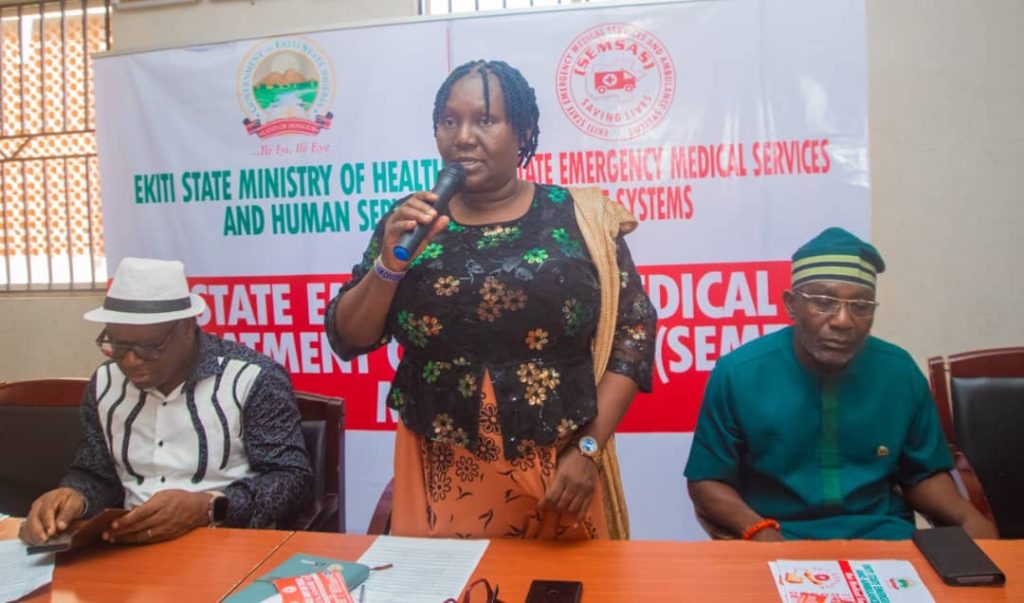
The Ekiti State Emergency Medical Service and Ambulance System (SEMSAS) held a strategic meeting of its Emergency Medicine Treatment Committee in Ado-Ekiti, bringing together health officials, security agencies, transport unions and media representatives.
Speaking at the meeting, the Commissioner for Health, Dr Oyebanji Filani, represented by the Permanent Secretary in the Ministry of Health and Human Services, Mrs Olusola Gbenga-Igotun, said emergency care was a vital part of the healthcare system.
She described the meeting as timely, noting that better coordination and planning were needed to ensure rapid response to emergencies across the state.
In a keynote address, the General Manager of the Ekiti State Health Insurance Scheme, Dr Charles Doherty, said prompt intervention during medical emergencies could save many lives.
He expressed confidence that the committee would play a key role in improving emergency response and ensuring that residents receive timely care.
- HIGHLIGHTS OF DECISIONS TAKEN AT THE SEVENTH MEETING (2026) OF THE EKITI STATE EXECUTIVE COUNCIL HELD AT THE EXECUTIVE COUNCIL CHAMBER, NEW GOVERNOR’S OFFICE, ADO-EKITI, ON TUESDAY, 22ND SEPTEMBER, 2026
- Ekiti Reactivates MSME Council, Targets Stronger Business Support
- Ekiti SUBEB Flags Off 2026 Enrolment Drive, Urges Parents To Enrol Children
- Ekiti Guber Tribunal Slams SDP Over Lack of Diligent Prosecution of Case
- Ongoing Ekiti Assembly Stewardship Programme Reflects Oyebanji’s Commitment to Transparency — Information Commissioner
The General Manager of the Broadcasting Service of Ekiti State (BSES), Mr Olu Popoola, said the station would support government efforts by raising public awareness about the availability and proper use of ambulance and emergency services.

He said access to accurate and timely information was essential in encouraging people to seek emergency medical help when needed.
Also speaking, the Director of Hospital Services and Training at the Ministry of Health and Coordinator of SEMSAS, Dr Olumide Obe, said the emergency response service, launched in 2023, was designed to provide rapid medical assistance in critical situations.
He noted that many residents still believed ambulances were meant mainly for transporting corpses, a perception he said was incorrect.
According to him, ambulances are intended to respond to emergencies such as road accidents, critical illnesses, injuries and childbirth complications.
Representatives of drivers’ unions, the Nigeria Police Force, the Nigerian Medical Association, private hospital owners, nurses and media organisations attended the meeting.